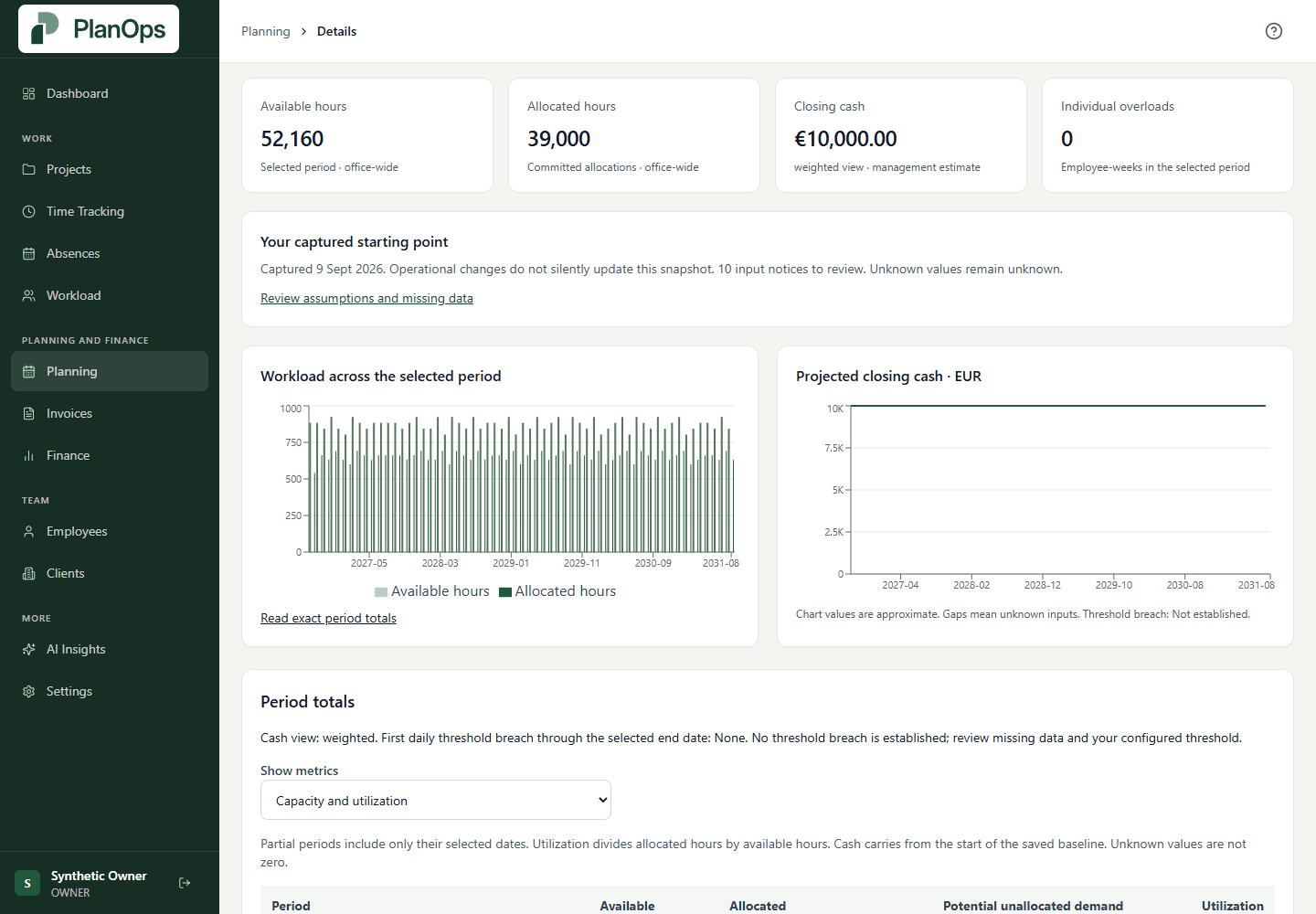
Start with your current projects
Bring together project dates, phases, milestones and working time. Capture a baseline so later assumptions have a clear reference.

Keep everyday work grounded in project records, then explore how future decisions could affect your office.
Try two assumptions for one month in a sample five-person office. These illustrative calculations explain the measures; they are not a saved PlanOps forecast.
110%
880 allocated hours / 800 available hours
€16,000
€24,000 fee − 160 hours × €50 cost/hour. A timing shift does not change this lifetime estimate.
€26,000
€20,000 opening + €24,000 receipts − €18,000 payments
The delayed receipt and work move into next month. Cash timing differs from contribution. This simplified example excludes taxes, holidays, onboarding time and all other projects; office-wide percentages can hide individual overload.
Explore PlanningBring together project dates, phases, milestones and working time. Capture a baseline so later assumptions have a clear reference.
Review available and allocated hours by person and period. Individual overloads remain visible even when the office average looks comfortable.
Delay a project, plan a hire or add an opportunity. Save the scenario while keeping the original project and employee records unchanged.
Compare workload, project forecast contribution and cash assumptions. Inspect the sources, missing inputs and exact saved revisions.
Employees record their work and absences. Project leads coordinate delivery. Authorized office managers review capacity and financial assumptions. Sensitive records stay within the permissions assigned to each person.
Recorded payments, forecast receipts and project contribution are different measures. PlanOps preserves that distinction and shows unknown inputs explicitly. Forecasts are management estimates, not guaranteed results.